How it started
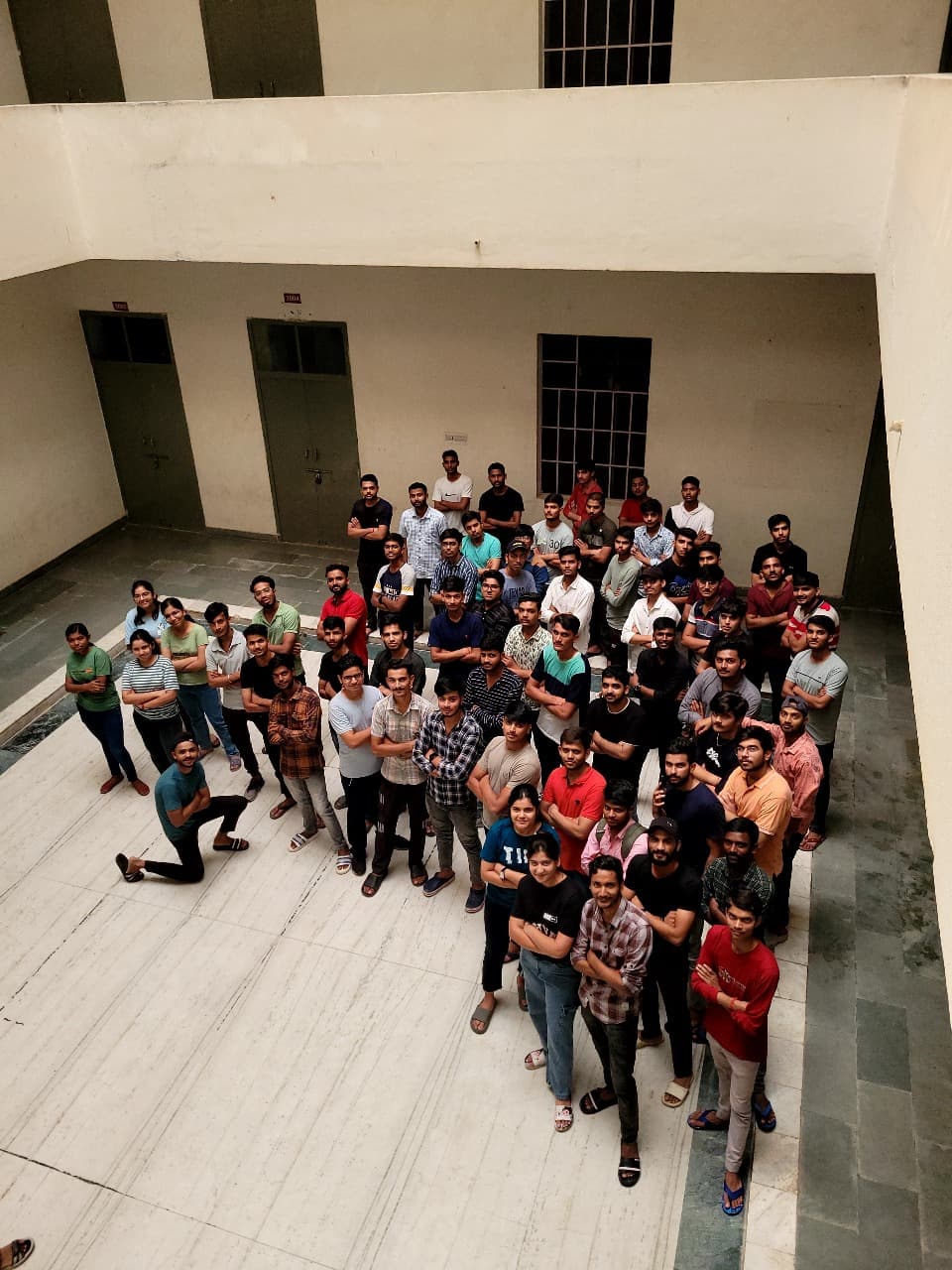
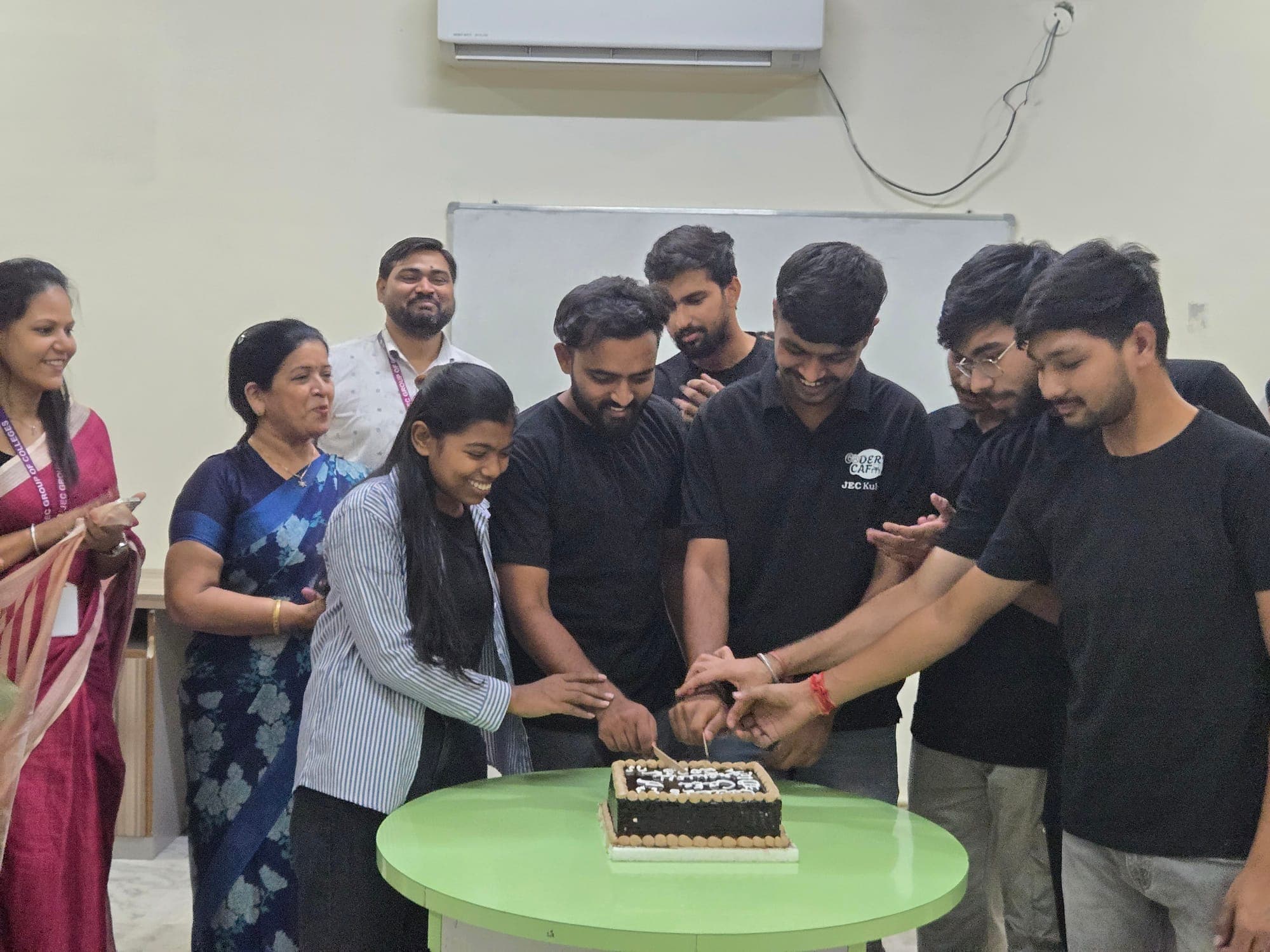
Coder's Cafe was founded in 2023 at Jaipur Engineering College by a group of final-year computer science students who noticed something simple: the study sessions they organized informally among friends were teaching more, faster, than a lot of scheduled coursework. Instead of letting that stay informal, they structured it into a club, with seniors mentoring juniors deliberately rather than by accident.
What started as a handful of students working through problems together grew to over 200 active members within a few years, organized across five technical domains, with full support from the college's faculty and administration.
The domain structure
Rather than running as one generic "coding club," Coder's Cafe splits into five domains, each with its own student head and its own skills track:
- Data Structures & Algorithms (DSA): arrays and strings, trees and graphs, dynamic programming, and system design, taught through weekly problem-solving sessions.
- Data Science: data analysis, machine learning, statistical modeling, and Python, built around hands-on projects rather than lecture slides.
- Full Stack Development: React and Vue on the frontend, Node.js and Express on the backend, database design, and API development, end to end.
- Java Development: core Java through Spring Boot and microservices, with a testing discipline built in from the start.
- DevOps Engineering: Docker, Kubernetes, CI/CD pipelines, and cloud platforms, the practices that rarely fit into a standard syllabus at all.
Every domain is led by a student, not a faculty member, which keeps the content current with what is actually being asked in interviews and internships that year, rather than a curriculum that updates once every few years.
The mentorship model, in practice
The structure Coder's Cafe runs on is peer-to-peer: senior students who have already been through the DSA grind, the first messy full-stack project, or a DevOps pipeline that broke in production, mentor the juniors coming up behind them. Each junior is paired with a senior mentor for their learning journey, and the learning itself happens through project-based work rather than isolated tutorials.
This is also how leadership rotates. Presidents, vice presidents, and domain heads are current students, not permanent staff, and the club has now run through three full batch cycles, 2023-24, 2024-25, and 2025-26, each handing off structure and institutional memory to the next.
What the events calendar actually looks like
Coder's Cafe's clearest public output is its events. Hackstrom 2025, run in collaboration with Hacker's Unity, was a 24-hour national-level hackathon that drew over 300 students from 5-6 different states. Hackathon 2025 and Hackathon 2024 followed the same format on a campus scale. The Programming Contest in February 2025 produced a clear podium: Prabhat Singh first, Krish Kumar second, Tanishka Pundhir third, real names, real results, not a participation-only format.
None of this requires outside sponsorship or a professional events team. It runs on the same student structure as everything else in the club.
What makes this different from a typical college coding club
A lot of college coding clubs exist mainly on paper, a WhatsApp group and an annual event. Coder's Cafe's difference is structural: five domains with named heads, a mentorship pairing system, a batch-over-batch alumni record you can actually look up on the Team page, and a events calendar with specific dates, specific attendance numbers, and specific winners. It is also fully embedded in Jaipur Engineering College's own infrastructure, with lab access and venue support from the administration, rather than operating around the college.
Where this leads
The club's own alumni record includes members now working at companies like Celebal Technologies, Cognizant, KPMG India, and a range of product and services firms, across DevOps, full-stack, and data roles. That is the actual measure of whether a student club is worth the time: not how it markets itself, but where its members end up. For a technical club based in Kukas, Jaipur, outside the usual metro tech hubs, that track record is the whole point.